>>

A classic, buttery bread stuffing with sautéed onions, celery and a chorus of fresh herbs—crispy on top, tender within, and perfect for holiday tables.
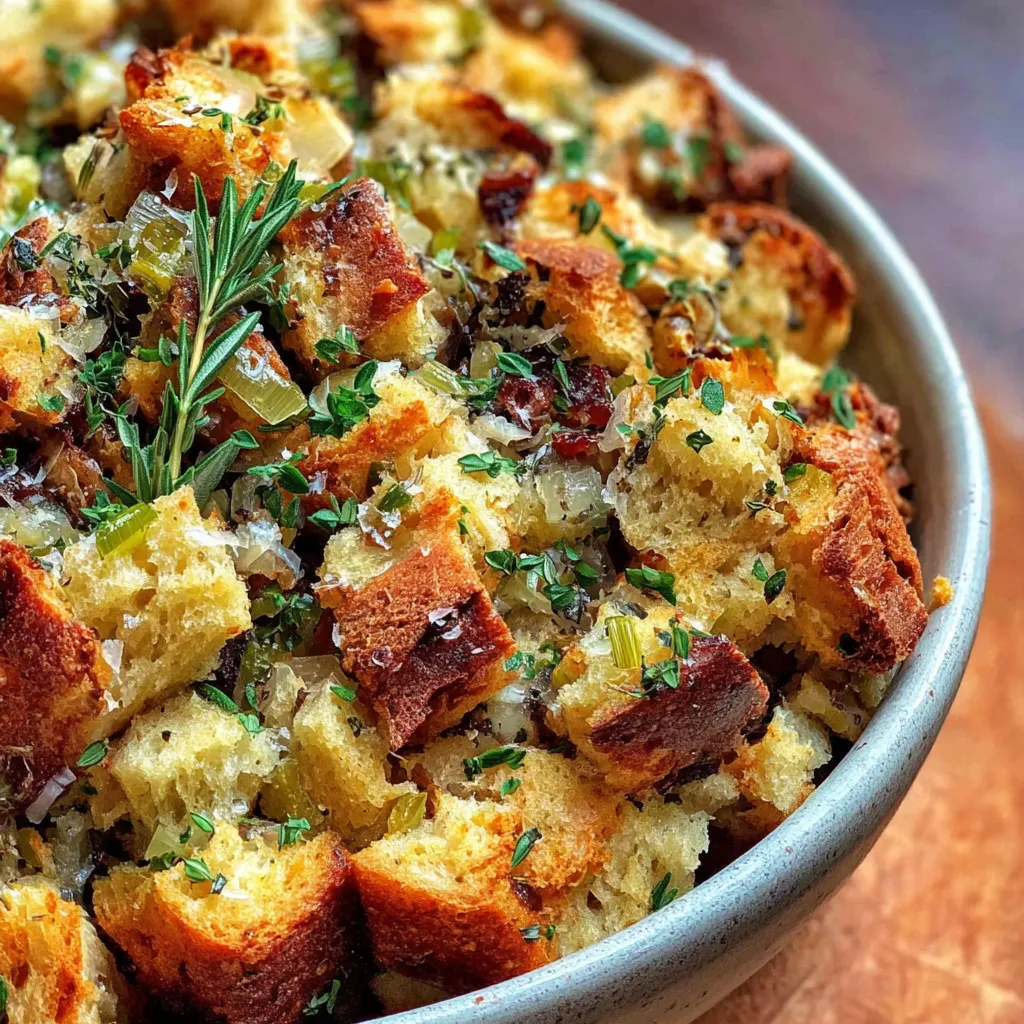
This classic Thanksgiving stuffing has been the anchor of my holiday table for as long as I can remember. I first learned this version from my grandmother during a blustery November when she insisted that the secret to a warm house was not just the roast but the scent of butter, sage and toasted bread. It became my rite of passage: tearing loaves, measuring herbs with my grandmother whispering exacting tips, and learning how the texture of the bread determines whether you end up with a perfect moist interior and a golden, crisp top. Every bite should give you a balance of soft interior cubes, savory herbal pockets and a top layer that offers a satisfying crunch.
I discovered that the most important moments are simple: the bread you choose, the length of toasting, and how you judge moisture when adding stock and eggs. This version is forgiving and flexible—use white loaves, French bread, ciabatta, or sourdough depending on what you have on hand—and it rewards a little attention to timing. The butter-swept aromatics become the backbone while the fresh sage and parsley tie that unmistakable Thanksgiving flavor together. I serve this in a well-buttered casserole, and watching guests reach for seconds has become one of my favorite holiday rituals.
On more than one Thanksgiving my younger cousin declared this the best part of the meal and asked for a second helping before dessert. I once tested a version with rosemary-heavy mix for a small dinner and found that even subtle changes in herb ratios create memorable variations—so encourage experimenting. Family members often take turns adding tiny touches like more thyme or an extra knob of butter on top before the last ten minutes of baking, and those small acts become part of our shared memory of the dish.
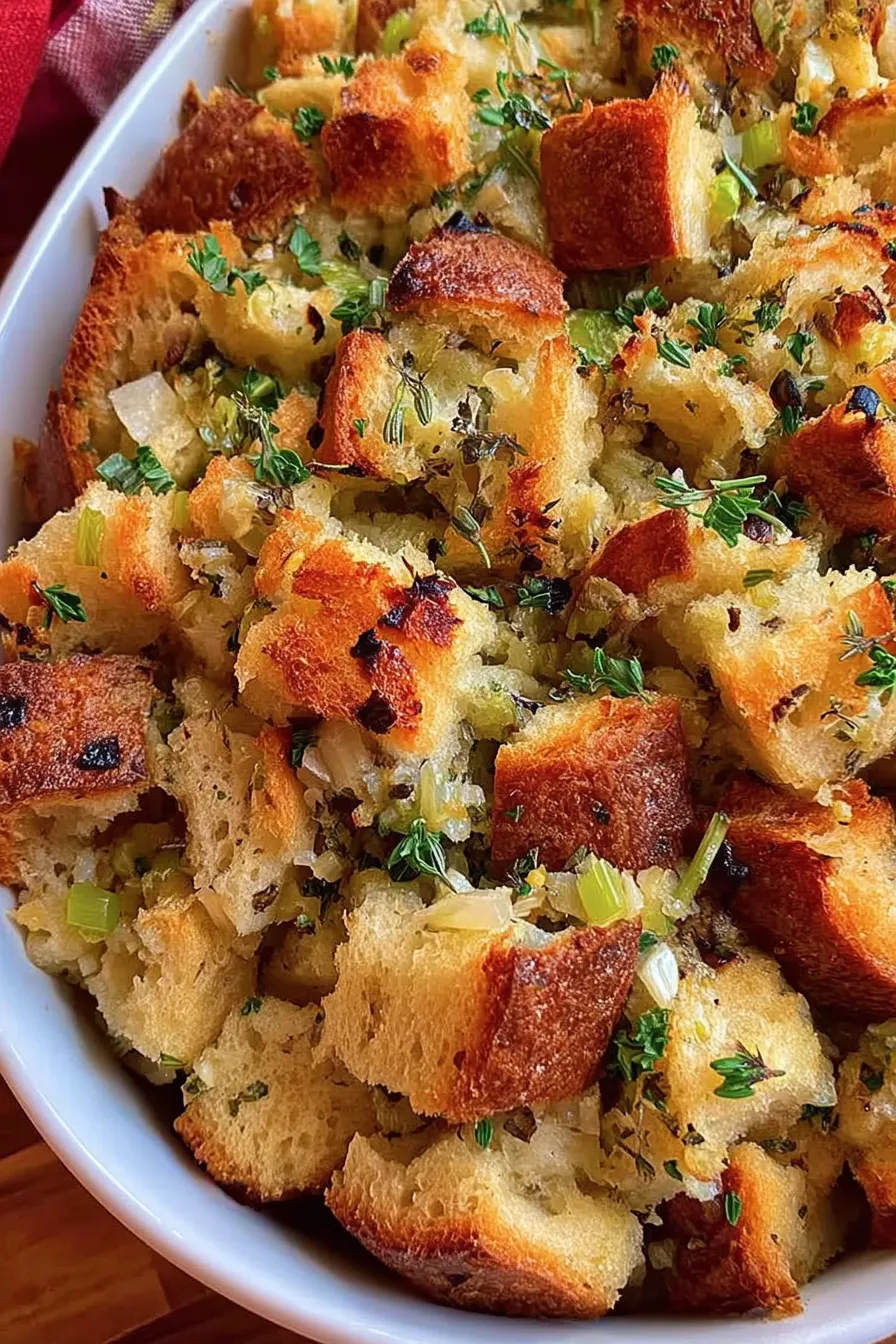
My favorite part of this recipe is the last ten minutes when the foil comes off and the kitchen fills with that toasty, herbal aroma that announces the meal is nearly ready. Guests often comment on the crisp top and the moist interior, and I love that small crunch juxtaposed with the softer center. Over the years, small variations—more parsley for brightness, a splash of white wine in the sauté pan, or toasted nuts folded in at the end—have created memorable versions for special dinners while the core method remains unchanged.
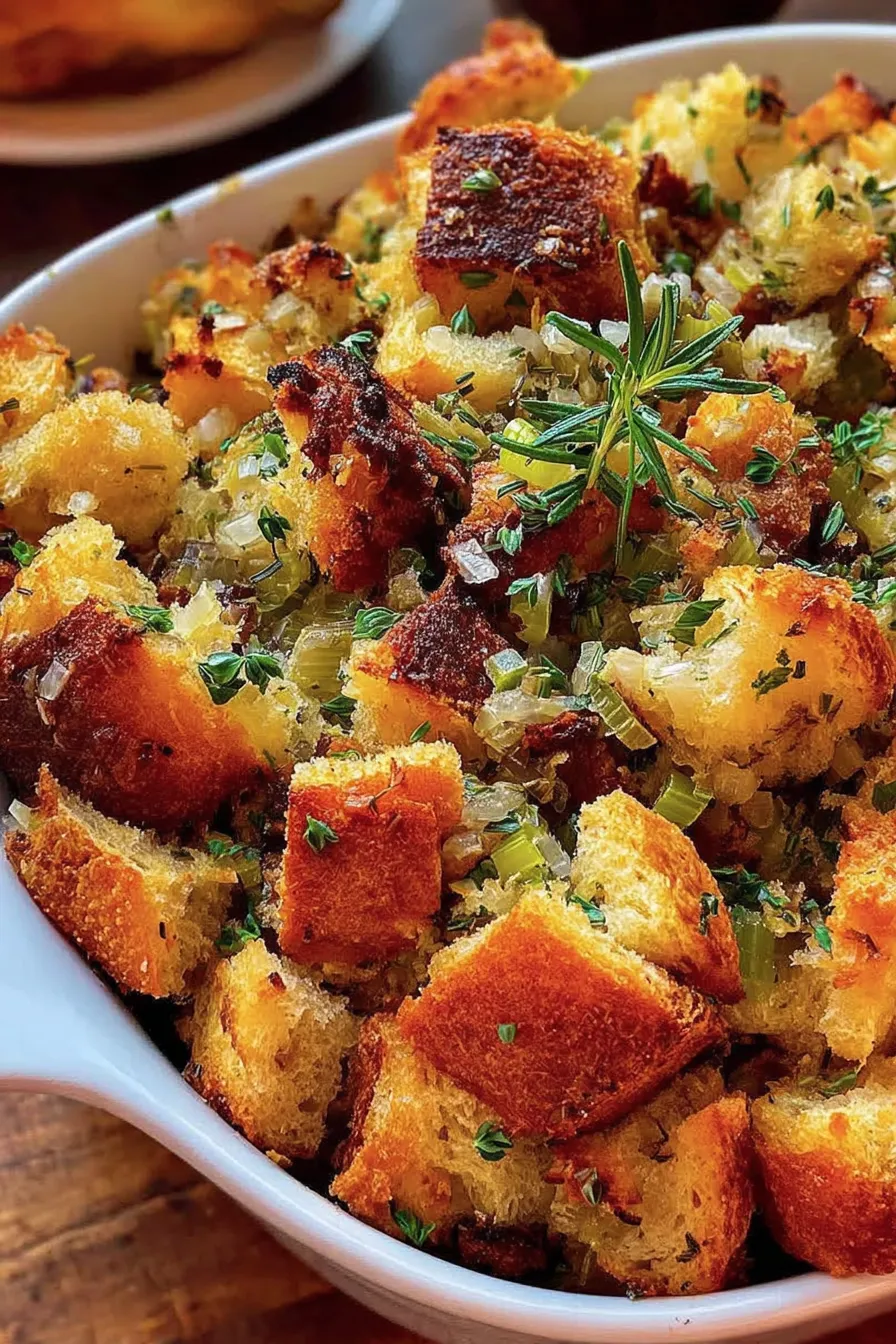
Cool leftovers to room temperature within two hours and transfer to shallow airtight containers. Refrigerate for up to four days. For longer storage, freeze portions in freezer-safe containers for up to three months. To reheat from refrigerated, place stuffing in an oven-safe dish, sprinkle with a few tablespoons of broth if it feels dry, cover with foil and heat at 350 degrees F for 20 to 30 minutes until warmed through; remove foil for the last 10 minutes to crisp the top. Thawed frozen portions reheat similarly but may need an extra 10 to 15 minutes.
To make this dairy-free, substitute the butter with an equal amount of plant-based spread or olive oil; flavor will be slightly different but still rich. For a vegetarian stock, use a robust vegetable stock in place of chicken or turkey broth. If you want a nuttier note, swap half the parsley for chopped fresh rosemary sparingly. For gluten-free, use certified gluten-free day-old bread or cube and toast gluten-free sandwich loaves—the absorption rate may vary slightly so add broth gradually. If you prefer a richer profile, add 1/2 cup cooked, crumbled sausage or chopped roasted chestnuts at the fold-in stage.
Serve alongside roast turkey or roasted root vegetables and a simple pan gravy. Garnish with a few extra chopped parsley leaves and a sprig of thyme for color. For a holiday buffet, spoon into a warm shallow casserole and place a buttered, toasted baguette alongside to allow guests to craft hearty plate combinations. A crisp green salad or lightly dressed brussels sprouts offers a bright counterpoint to the buttery stuffing.
Stuffing as a concept goes back centuries and varies regionally from herb-forward New England versions to cornbread-based Southern types. The version presented here—bread-based with aromatic herbs and celery—has its roots in European household traditions adapted in North American kitchens where different loaves and local herbs shaped regional variations. Over time, each family developed its own preferred bread and herb ratios, making stuffing a personal and cultural marker of many holiday tables.
In autumn, fold in roasted butternut squash cubes and a handful of toasted pepitas for a seasonal twist. For winter gatherings, swap some of the bread for cubed brioche for added richness, or add cooked, chopped apples and a dash of cinnamon for a subtly sweet contrast. Spring and summer dinners benefit from lighter herbs—more parsley and less sage—and the addition of fresh peas or finely chopped asparagus for bright color.
Toast the bread and store airtight at room temperature up to 48 hours ahead. Sauté the vegetables and chop herbs up to a day before. Combine everything the morning of service and keep chilled until an hour before baking to reduce oven time. Portion into individual ramekins for easy reheating and attractive plating at potlucks. Use a thermometer to ensure the center reaches at least 165 degrees F for food safety when reheating for large gatherings.
Ultimately, this dish is forgiving and full of comfort. It’s a canvas for small family traditions and last-minute improvisations, and I encourage you to make it your own. Enjoy the ritual of preparing it and the pleasure of sharing it around the table.
Toast the bread at low temperature until dry but not browned for the best absorption and final texture.
Warm the broth slightly before adding to help it integrate quickly with the eggs and bread.
When adding liquid, do it gradually and test by squeezing a handful: it should hold together but not drip.
This nourishing traditional thanksgiving stuffing recipe is sure to be a staple in your kitchen. Enjoy every moist, high protein slice — it is perfect for breakfast or as a wholesome snack any time.
Yes. To make ahead, assemble and cover, then refrigerate overnight. Add 10 to 15 minutes to the covered baking time if baking straight from the refrigerator.
Use plant-based butter and an egg substitute or omit eggs and add an extra 1/2 cup of broth with a flax egg to keep it together.
Freeze baked portions in airtight containers for up to 3 months. Thaw overnight in the fridge and reheat in a 350 degrees F oven until hot.
This Traditional Thanksgiving Stuffing recipe makes perfectly juicy, tender, and flavorful steak every time! Serve with potatoes and a side salad for an unforgettable dinner in under 30 minutes.
Preheat oven to 250 degrees F. Cube or tear bread into 1 to 2 inch pieces and spread on a rimmed baking sheet. Toast for about 1 hour, stirring occasionally, until dry but not browned. Cool before using.
In a large skillet over medium heat, melt 1 cup unsalted butter. Add chopped onion and diced celery and sauté 7 to 10 minutes until softened and translucent but not brown. Reduce heat if browning occurs.
In a large mixing bowl, combine toasted bread, sautéed vegetables, parsley, sage, rosemary, thyme, kosher salt and black pepper. Toss gently to distribute ingredients evenly.
Whisk eggs with 2 cups warm broth. Gradually pour over bread mixture while mixing by hand until mixture is evenly moist but not soggy. Add up to 1/2 cup additional broth if necessary.
Grease a 9x13-inch casserole with 1 tablespoon butter. Transfer stuffing, cover with foil and bake at 350 degrees F for 40 minutes. Remove foil and bake 25 to 35 more minutes until top is golden and crispy.
Last Step: Please leave a rating and comment letting us know how you liked this recipe! This helps our business to thrive and continue providing free, high-quality recipes for you.
Leave a comment & rating below or tag
@gusteen on social media!

Ultra-fudgy brownies crowned with melty marshmallows and a glossy cocoa icing. A nostalgic crowd-pleaser that slices cleanly and disappears fast.
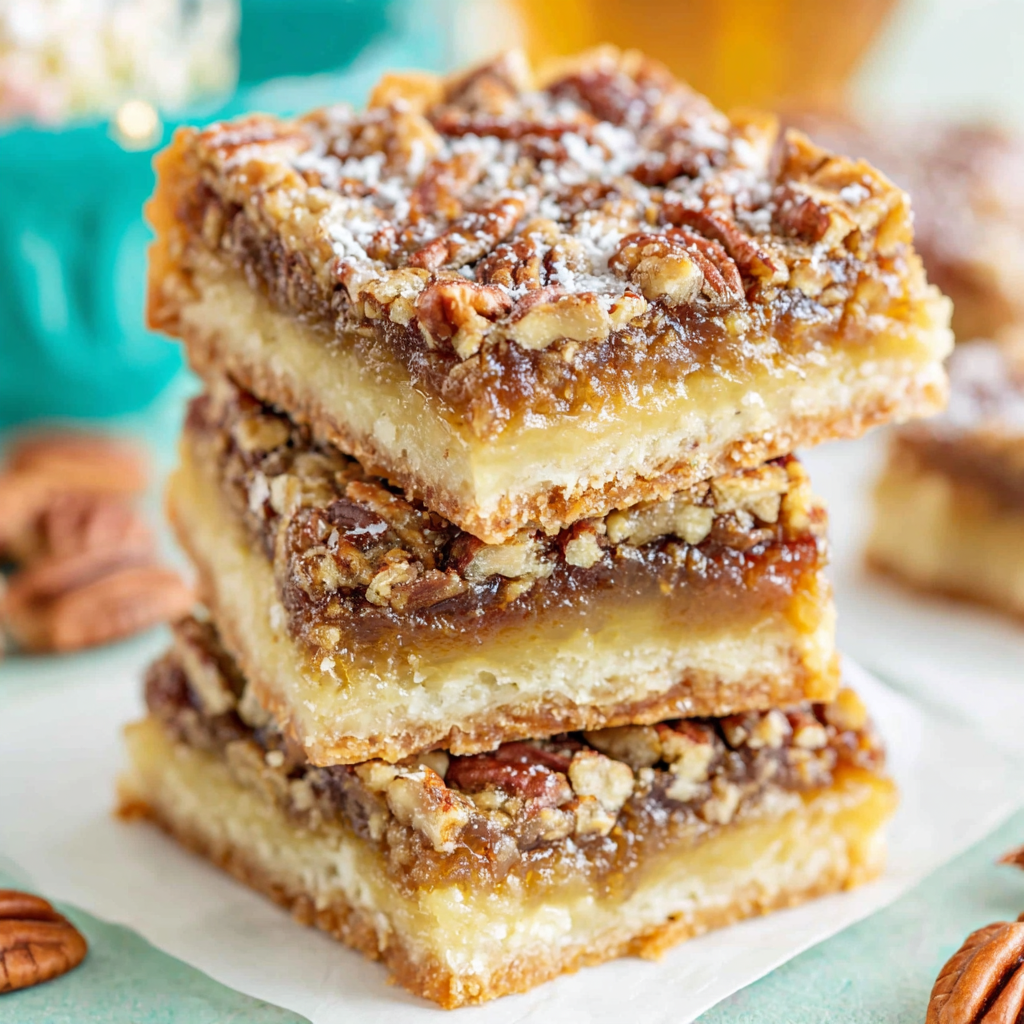
Buttery shortbread crust meets gooey brown-sugar pecan filling in these quick, crowd-pleasing bars, prepped in just 10 minutes.
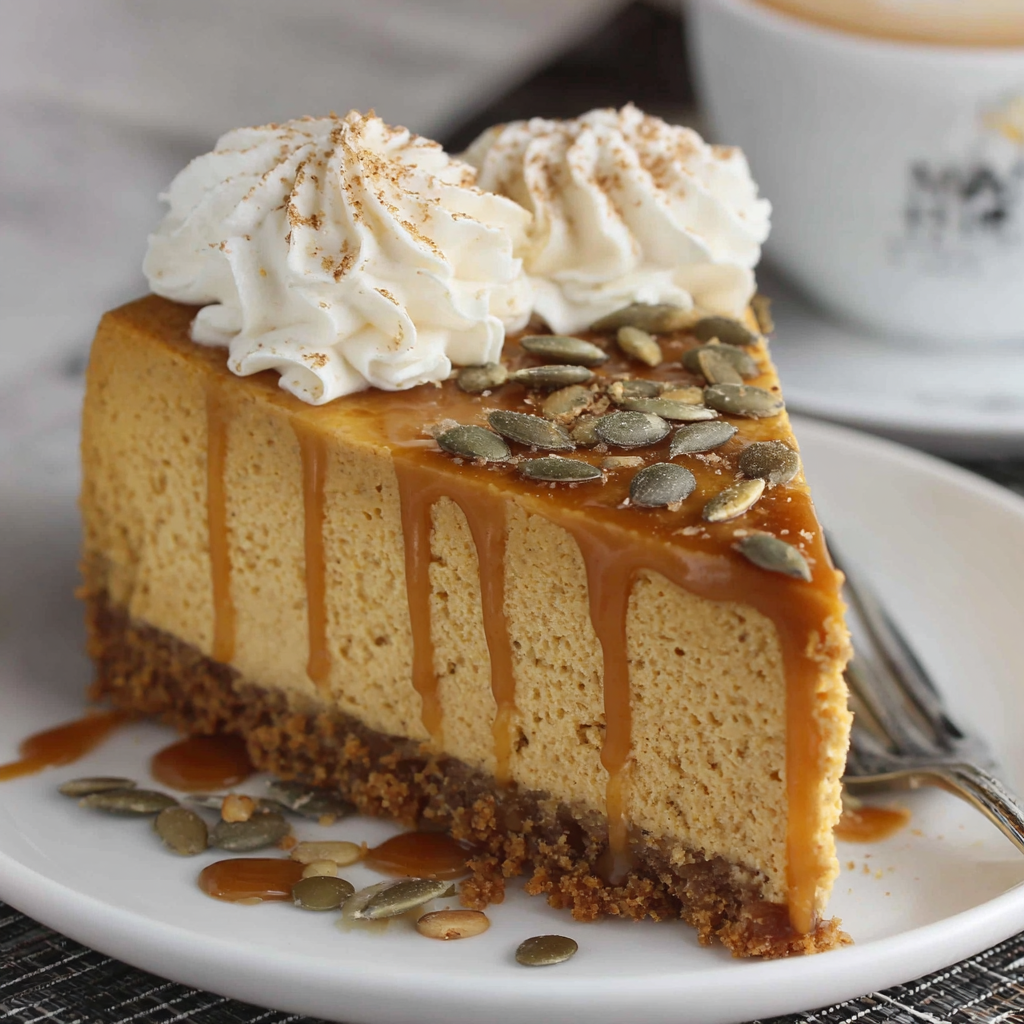
Ultra-smooth pumpkin cheesecake with warm spice, sturdy graham crust, and a foolproof, crack-free bake. Perfect with caramel and whipped cream.
Leave a comment & rating below or tag @gusteen on social media!
Enjoyed this recipe? Share it with friends and family, and don't forget to leave a review!
This recipe looks amazing! Can't wait to try it.
Comments are stored locally in your browser. Server comments are displayed alongside your local comments.

Join to receive our email series which contains a round-up of some of our quick and easy family favorite recipes.