

Winter Minestrone Soup with Butternut Squash and Kale | Gusteen
30-MINUTE MEALS! Get the email series now
Royal Recipe

Winter Minestrone Soup with Butternut Squash and Kale

5 from 1 vote
1 Comments
Charlotte Anne
By: Charlotte AnneUpdated: Dec 6, 2025
This post may contain affiliate links. Please read our disclosure policy.

A cozy, veggie-forward minestrone that balances sweet roasted butternut, hearty beans, and leafy kale—perfect for chilly evenings and make-ahead nights.
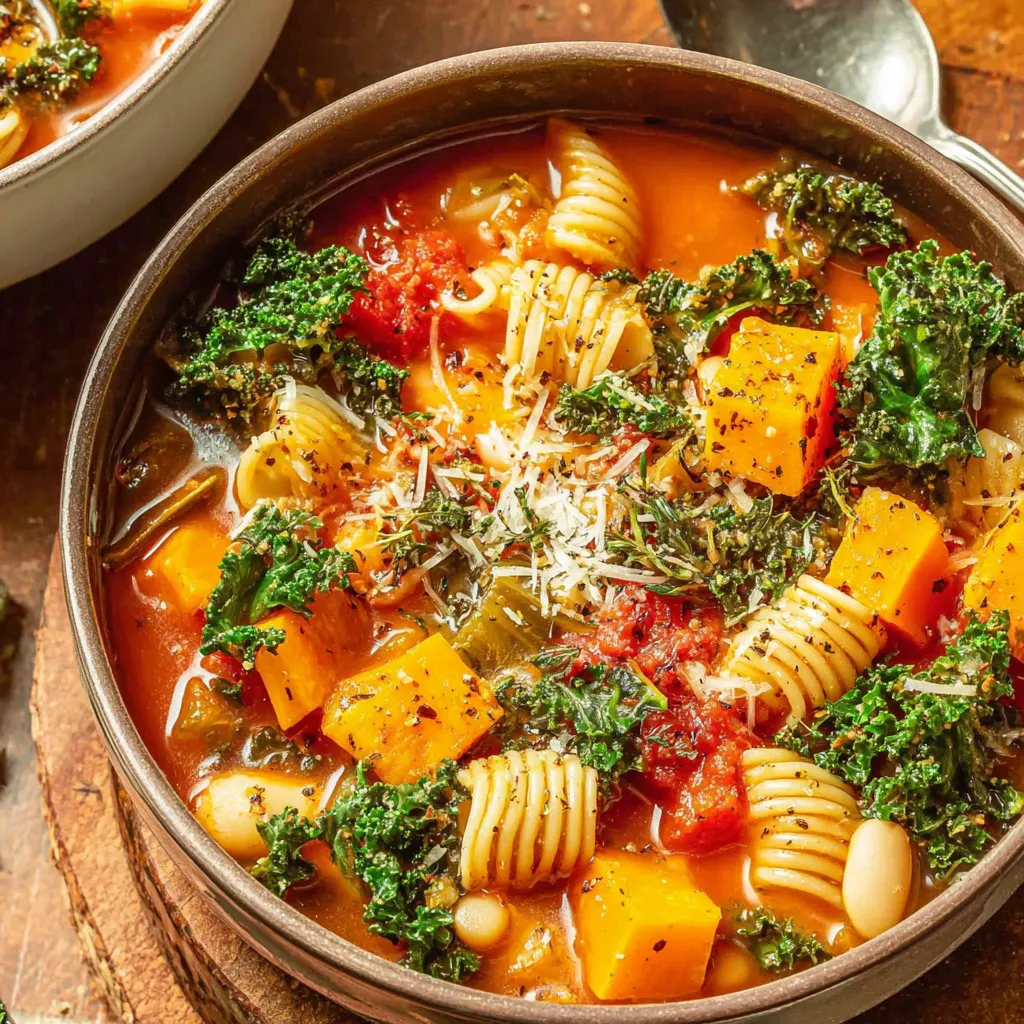
Winter Minestrone Soup with Butternut Squash and Kale
This Winter Minestrone Soup with Butternut Squash and Kale began as a pantry rescue on a snowy evening and quickly became a family favorite. I discovered this combination one December when I had leftover squash, a can of tomatoes, and a stubborn bunch of kale that needed to be used. The result was surprisingly bright: sweet, tender squash cubes, savory tomato broth, and the satisfying bite of short pasta and butter beans. Every spoonful delivers comfort without heaviness, and the aroma of sage and rosemary in the kitchen is something I still associate with winter Sundays. I love how the texture shifts from silky broth to toothsome pasta and creamy beans. What makes this version special is its balance and timing. The squash cooks just long enough to caramelize slightly at the edges before simmering into a rich broth, while the kale is added at the end to keep its color and a touch of chew. I use radiatore or another short ridged pasta so the broth clings to each piece, bringing herbs and tomato together with every bite. This is a soup that travels well to weeknight dinners, potlucks, or a cozy lunch—easy to scale up and forgiving if you swap a few ingredients.

Why You'll Love This Recipe

  • Ready in about 40 minutes from start to finish, making it an ideal 30- to 60-minute winter warmer that fits weeknight schedules.
  • Uses pantry staples plus seasonal produce: canned tomatoes and beans pair perfectly with fresh butternut and kale for an affordable, nourishing meal.
  • Make-ahead friendly—soup flavors deepen after a day, and it reheats beautifully without losing texture.
  • Vegetable-forward but satisfying thanks to butter beans and short pasta, so it works for meatless nights and is easy to adapt to vegetarian diets.
  • Layered herb profile: sage, rosemary, and thyme add warmth and complexity without overpowering the natural sweetness of squash.
  • Flexible: swap in gluten-free pasta, vegetable broth, or other winter greens to match dietary needs and pantry contents.

I first served this at a small family dinner and watched everyone reach for seconds. My sister said the squash gave the broth a subtle sweetness that made it feel like a bowlful of winter sunshine. That immediate family approval convinced me to keep this one in rotation throughout the cold months; it’s one of those dishes friends ask for whenever they visit.
Ingredients

  • Short pasta (1 cup): I used radiatore for its ridged shape which traps broth and herbs. Choose a quality brand like Barilla or De Cecco; measure uncooked to avoid overcooking—about 1 cup yields roughly 2 servings once combined in the soup.
  • Olive oil (2 tablespoons): Use extra-virgin olive oil for flavor; it helps sauté the celery and garlic while contributing a fruity backbone to the broth.
  • Celery (2 stalks): Sliced thin for aromatics—look for firm, crisp stalks with bright leaves; celery is part of the classic soffritto that grounds the flavor.
  • Garlic (2 cloves): Minced fresh garlic is key; jarred garlic lacks brightness. Cook briefly to avoid burning which produces bitterness.
  • Tomato paste (1 tablespoon): Adds concentrated tomato depth—cook it briefly with garlic to caramelize and remove raw tang.
  • Butternut squash (2 cups, peeled and diced): About 1 small squash or pre-cut from the store; dice into 1/2-inch cubes so it cooks evenly and lightly browns before simmering.
  • Salt and black pepper (1/2 teaspoon each, divided): Season in stages: some during sauté for the vegetables, and adjust at the end to taste.
  • Low-sodium chicken broth (4 cups): Use low-sodium to control final salt; swap in vegetable broth to keep it vegetarian.
  • Crushed tomatoes (28 ounces): I prefer San Marzano-style crushed for slightly sweet acidity; whole peeled tomatoes crushed by hand also work.
  • Water (2 cups): Adds volume and adjusts the brightness of the tomatoes; you can use more broth if you prefer a richer base.
  • Fresh herbs: Sage (1 teaspoon minced), rosemary (1/2 teaspoon minced), and 3 sprigs thyme—fresh herbs add warmth and a wintery aroma.
  • Red pepper flakes (1/2 teaspoon, optional): For a gentle heat that complements the sweet squash.
  • Kale (2 cups, chopped, ribs removed): Use curly or lacinato; remove tough ribs for a tender bite and chop into bite-sized pieces so it wilts evenly.
  • Butter beans (15 ounces, drained and rinsed): Also labeled lima beans—these add creamy texture and protein; drain and rinse to remove excess canning liquid.

Instructions

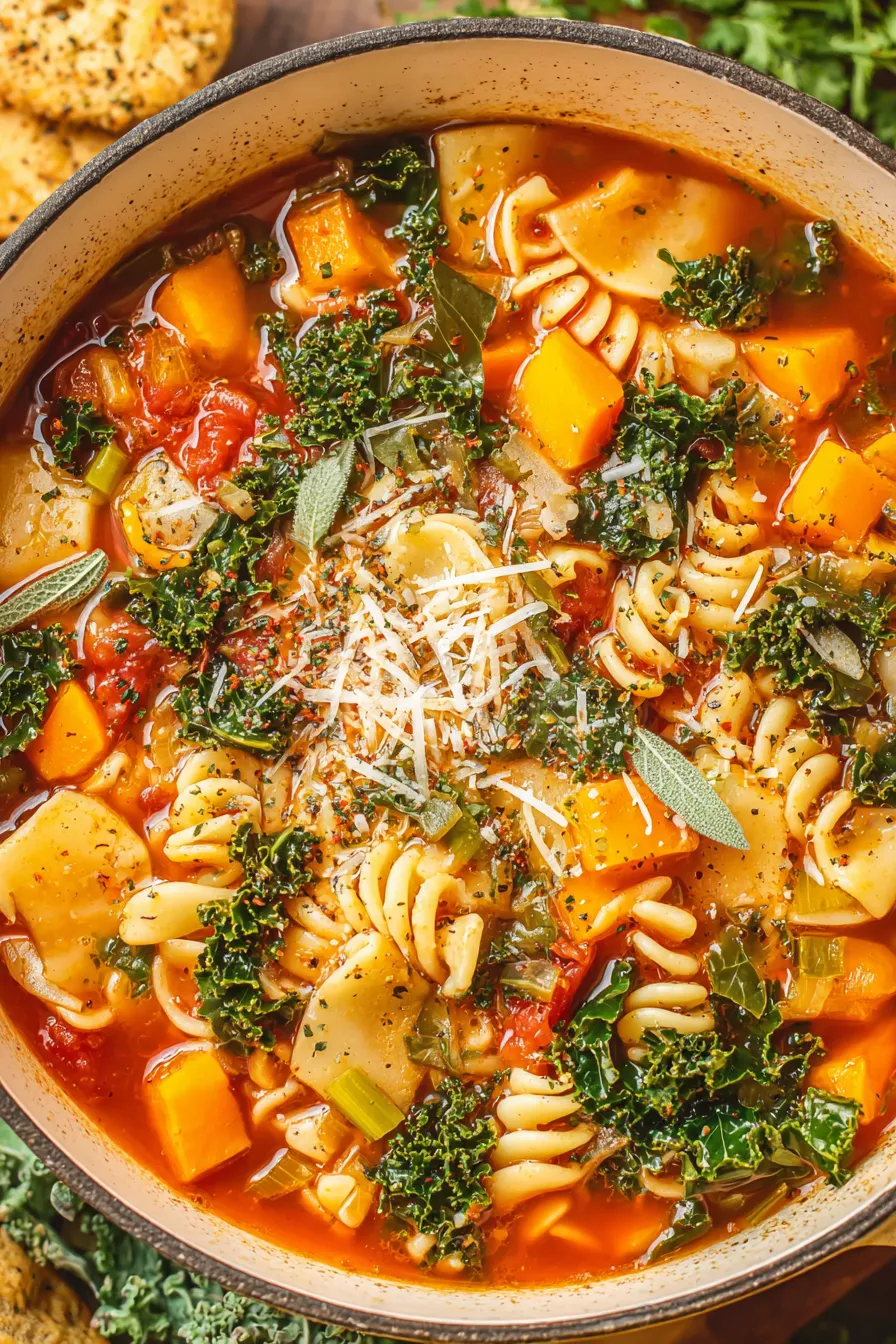
Cook the pasta: Bring a large pot of salted water to a rolling boil. Add 1 cup uncooked radiatore and cook until al dente according to package directions, usually 8 to 10 minutes. Drain and set aside in a colander, tossing with a teaspoon of olive oil to prevent clumping. Reserve a cup of pasta cooking water if you want a silkier finish. Sauté aromatics: In a large soup pot, heat 2 tablespoons olive oil over medium heat until shimmering. Add 2 sliced celery stalks and sauté 3 to 4 minutes until softened but not browned. Add 2 minced garlic cloves and 1 tablespoon tomato paste; cook about 1 minute, stirring constantly, until the paste darkens slightly and the garlic is fragrant. Develop the squash: Toss in 2 cups diced butternut squash, season with 1/4 teaspoon salt and 1/4 teaspoon black pepper, and cook 4 to 6 minutes until edges begin to brown. This light caramelization builds sweetness and depth in the final broth; if the pot seems dry, add a splash of broth to prevent sticking. Add liquids and herbs: Pour in 4 cups low-sodium chicken broth, 28 ounces crushed tomatoes, and 2 cups water. Stir in 1 teaspoon minced sage, 1/2 teaspoon minced rosemary, and 3 thyme sprigs. Add 1/2 teaspoon red pepper flakes if using. Bring to a gentle simmer and cook 5 to 7 minutes until the squash is tender when pierced with a fork. Finish with greens and beans: Add 2 cups chopped kale and 15 ounces drained butter beans to the pot. Cook 1 to 2 minutes until the kale softens but retains bright color. Taste and adjust seasoning with the remaining 1/4 teaspoon salt and 1/4 teaspoon pepper. Remove thyme sprigs before serving. Combine with pasta and serve: Stir the cooked pasta into the soup and heat 1 to 2 minutes until warmed through. If the soup feels too thick, loosen with reserved pasta water or an extra 1/2 cup broth. Ladle into bowls and serve warm with grated Parmesan, chopped fresh herbs, and lemon wedges if desired. User provided content image 1

You Must Know

  • High-protein and fiber-rich thanks to butter beans; freezes well for up to 3 months in airtight containers once fully cooled.
  • Refrigerate leftovers within 2 hours and consume within 4 days for best quality; reheat gently on the stove to avoid overcooking pasta.
  • Kale added at the end preserves color and nutrients—overcooking makes it mushy and dulls the flavor.
  • Use low-sodium broth to control salt; adjust at the end rather than during cooking to avoid oversalting.
  • To keep it dairy-free, skip the Parmesan garnish or use a vegan alternative; to make it vegetarian, substitute vegetable broth.

My favorite aspect of this soup is the way simple ingredients transform into something layered and comforting—sweet winter squash, tart tomatoes, and aromatic herbs come together like a warm blanket. Family members often request this after a long day, and I love the ritual of serving it with lemon wedges on the side so each person can brighten their bowl to taste. It’s the kind of soup that feels special without a lot of fuss.

User provided content image 2

Storage Tips

Cool leftovers to room temperature for no more than one hour before refrigerating. Store in shallow airtight containers to help rapid cooling. In the fridge, the soup will keep 3 to 4 days. To freeze, portion into freezer-safe containers or heavy-duty freezer bags and press out excess air; freeze for up to 3 months. When reheating from frozen, thaw overnight in the refrigerator if possible, then reheat on the stove over medium-low heat, stirring occasionally; add a splash of water or broth if the pasta has absorbed too much liquid.

Ingredient Substitutions

For a vegetarian version, swap chicken broth for vegetable broth—the herb profile remains unchanged. Replace butter beans with cannellini beans if you prefer a firmer bite, or use chickpeas for added texture. If butternut is unavailable, use sweet potatoes or pumpkin in equal volume; note that sweet potato will break down slightly more and create a slightly sweeter broth. For a gluten-free option, substitute your favorite gluten-free short pasta and check canned product labels for cross-contamination warnings.

Serving Suggestions

Serve with grated Parmesan or Pecorino and a drizzle of extra-virgin olive oil for richness. Brighten individual bowls with lemon wedges and sprinkle chopped fresh parsley for color. This pairs well with crusty bread or garlic-rubbed toasted slices for dipping. For heartier meals, add shredded rotisserie chicken or a handful of crisp pancetta on top for a salty contrast. It also works beautifully as a starter before a roasted winter vegetable main course.

Cultural Background

Minestrone is rooted in Italian peasant cooking where seasonal vegetables, legumes, and stale bread or pasta were stretched into nourishing bowls. Regional variations abound across Italy, reflecting local produce—northern versions often include beans and winter squash, while coastal areas lean on seafood. This winter-forward adaptation borrows that traditional spirit: using available root vegetables and hardy greens to create a warming, resourceful dish that honors the simplicity and sustainability of classic Italian home cooking.

Seasonal Adaptations

In early spring, swap kale for tender spinach and use fresh tomatoes when they’re at peak ripeness for a brighter flavor. In late fall, increase the squash to intensify the sweetness and add a pinch of smoked paprika for depth. During summer months, cool the soup slightly and stir in diced basil for a fresh herb profile. For holiday gatherings, make a large batch and serve family-style with an assortment of garnishes like toasted pumpkin seeds, grated aged cheese, or lemon zest.

Meal Prep Tips

Prepare components ahead: roast or dice the squash and chop herbs the day before. Cook the pasta separately and store it lightly oiled in the refrigerator; when ready to eat, reheat the soup and add the pasta at the last minute to preserve texture. Portion into individual containers for grab-and-go lunches. If freezing, omit the pasta and cook or add fresh shortly after reheating to avoid a gummy texture from reheated pasta.

I encourage you to make this recipe your own—tweak the herbs, try different beans, or add a squeeze of citrus to brighten the bowl. There’s great joy in sharing a warm pot of soup with people you love, and this version has been my go-to for bringing that comfort to the table.

Pro Tips

  • Caramelize the squash slightly before simmering to enhance natural sweetness and depth.

  • Reserve a little pasta cooking water to loosen the soup if it becomes too thick after adding pasta.

  • Add kale at the end to preserve color, texture, and nutrients—overcooking makes it mushy.

  • Use low-sodium broth so you can control seasoning at the end rather than oversalting early.

  • If making ahead and freezing, omit pasta; add freshly cooked pasta when reheating.

This nourishing winter minestrone soup with butternut squash and kale recipe is sure to be a staple in your kitchen. Enjoy every moist, high protein slice — it is perfect for breakfast or as a wholesome snack any time.

FAQs about Recipes

Can I make this vegetarian?

Yes—replace chicken broth with vegetable broth and omit Parmesan to make it vegetarian and dairy-free.

How long does the soup keep?

Refrigerate for 3 to 4 days; freeze for up to 3 months. For best texture, add fresh pasta when reheating.

Tags

Winter Warmers SoupWinter recipesHealthy comfort foodItalian-inspiredFamily-friendly
No ratings yet

Winter Minestrone Soup with Butternut Squash and Kale

This Winter Minestrone Soup with Butternut Squash and Kale recipe makes perfectly juicy, tender, and flavorful steak every time! Serve with potatoes and a side salad for an unforgettable dinner in under 30 minutes.

Servings: 6 steaks
Winter Minestrone Soup with Butternut Squash and Kale
Prep:15 minutes
Cook:25 minutes
Rest Time:10 mins
Total:40 minutes

Ingredients

Pasta

Produce

Pantry & Canned

Liquids

Instructions

1

Cook the pasta

Bring a large pot of salted water to a boil. Cook 1 cup radiatore until al dente per package directions, usually 8 to 10 minutes. Drain and set aside, tossing with a teaspoon of olive oil to prevent sticking. Reserve some pasta water if desired.

2

Sauté aromatics

Heat 2 tablespoons olive oil in a large pot over medium heat. Add 2 sliced celery stalks and cook 3 to 4 minutes until softened. Add 2 minced garlic cloves and 1 tablespoon tomato paste; cook about 1 minute until fragrant and paste darkens slightly.

3

Brown the squash

Add 2 cups diced butternut squash and season with 1/4 teaspoon salt and 1/4 teaspoon pepper. Cook 4 to 6 minutes until lightly browned to develop sweetness, adding a splash of broth if needed to prevent sticking.

4

Add liquids and herbs

Pour in 4 cups low-sodium chicken broth, 28 ounces crushed tomatoes, and 2 cups water. Stir in 1 teaspoon minced sage, 1/2 teaspoon minced rosemary, and 3 thyme sprigs. Add 1/2 teaspoon red pepper flakes if desired. Bring to a simmer and cook 5 to 7 minutes until squash is tender.

5

Finish with greens and beans

Stir in 2 cups chopped kale and 15 ounces drained butter beans. Cook 1 to 2 minutes until kale softens. Remove thyme sprigs and taste, adjusting with remaining 1/4 teaspoon salt and 1/4 teaspoon pepper as needed.

6

Combine pasta and serve

Add the cooked pasta to the pot and heat 1 to 2 minutes until warmed through. If soup is too thick, loosen with reserved pasta water or extra broth. Serve warm with grated Parmesan, fresh herbs, and lemon wedges if desired.

Last Step: Please leave a rating and comment letting us know how you liked this recipe! This helps our business to thrive and continue providing free, high-quality recipes for you.

Nutrition

Calories: 350kcal | Carbohydrates: 50g | Protein:
14g | Fat: 8g | Saturated Fat: 2g |
Polyunsaturated Fat: 2g | Monounsaturated Fat:
3g | Trans Fat: 1g | Cholesterol: 253mg | Sodium:
0mg | Potassium: 953mg | Fiber: 0g | Sugar:
0g | Vitamin A: 577IU | Vitamin C: 3mg | Calcium:
47mg | Iron: 6mg

Did You Make This?

Leave a comment & rating below or tag
@gusteen on social media!

Winter Minestrone Soup with Butternut Squash and Kale

Categories:

Winter Minestrone Soup with Butternut Squash and Kale

Did You Make This?

Leave a comment & rating below or tag @gusteen on social media!

Rate This Recipe

Share This Recipe

Enjoyed this recipe? Share it with friends and family, and don't forget to leave a review!

Comments (1)

Leave a Comment

0/1000 characters
Food Lover
1 day ago

This recipe looks amazing! Can't wait to try it.

Rating:

Comments are stored locally in your browser. Server comments are displayed alongside your local comments.

Family Photo

Hi, I'm Charlotte!

Chef and recipe creator specializing in delicious Winter Warmers cooking. Passionate about sharing easy-to-follow recipes that bring families together around the dinner table.

30-Minute Meals!

Join to receive our email series which contains a round-up of some of our quick and easy family favorite recipes.